

Planning an interior renovation in Toronto often starts with a simple question: do I need a permit?
For many homeowners, the answer is not always obvious. A kitchen renovation, bathroom update, basement renovation, or full home interior project may look like a normal home improvement project from the outside. But depending on the scope, layout changes, structural work, plumbing, electrical, fire safety, and zoning considerations, a building permit may become part of the planning process.
The important point is this: permit requirements are usually based on the type and extent of work being done, not only the name of the room.
This article is not legal or permit advice. It is a practical homeowner guide to help you understand what may need to be reviewed before starting an interior renovation in Toronto or the GTA.
1. What Is a Building Permit?
A building permit is formal permission from the municipality to begin certain types of construction, demolition, addition, or renovation work. In Toronto, permit review is used to check whether proposed work complies with the Ontario Building Code, zoning by-laws, and other applicable laws.
For homeowners, this matters because a renovation is not only about finishes. Some interior changes can affect safety, structure, fire separation, plumbing, electrical systems, ventilation, or how the home is used.
A permit does not simply make a project more official. It also helps clarify whether the proposed work has been reviewed before construction begins.
2. Interior Renovation Does Not Always Mean the Same Scope
Two homeowners may both say they are planning an interior renovation, but the actual scope can be very different.
One project may only involve replacing cabinets, repainting walls, changing flooring, or updating fixtures. Another project may include removing walls, changing the layout, relocating plumbing, finishing a basement, altering stairs, modifying openings, or changing how part of the home is used.
These projects should not be treated the same way.
Before assuming a permit is or is not required, the actual scope should be reviewed. The more a renovation affects structure, layout, building systems, or life safety, the more important it becomes to confirm requirements with the City or a qualified professional.
3. When Might an Interior Renovation Need a Permit?
The City of Toronto explains that a building permit is generally required for construction, demolition, additions, or material alteration of a building or structure. The City also provides examples of common projects that may or may not require a permit, while noting that each project should be reviewed based on its specific details.
Interior renovation work may need closer review when it involves items such as:
Changing or removing walls. Altering structural elements. Creating new rooms or changing room layouts. Finishing or renovating a basement. Relocating plumbing. Adding or changing stairs. Changing windows, doors, or openings. Modifying fire separations. Creating a secondary suite. Changing the use of part of a home.
Not every renovation will require a permit, and not every cosmetic update needs the same level of review. But if the project goes beyond surface finishes, it is worth checking before work begins.
4. Kitchen Renovations and Permit Questions
Kitchen renovation is one of the most common areas where homeowners are unsure about permits.
A simple kitchen update may include new cabinets, countertops, backsplash, flooring, lighting, and appliances. If the layout remains largely the same and no major building systems are affected, the project may be more straightforward.
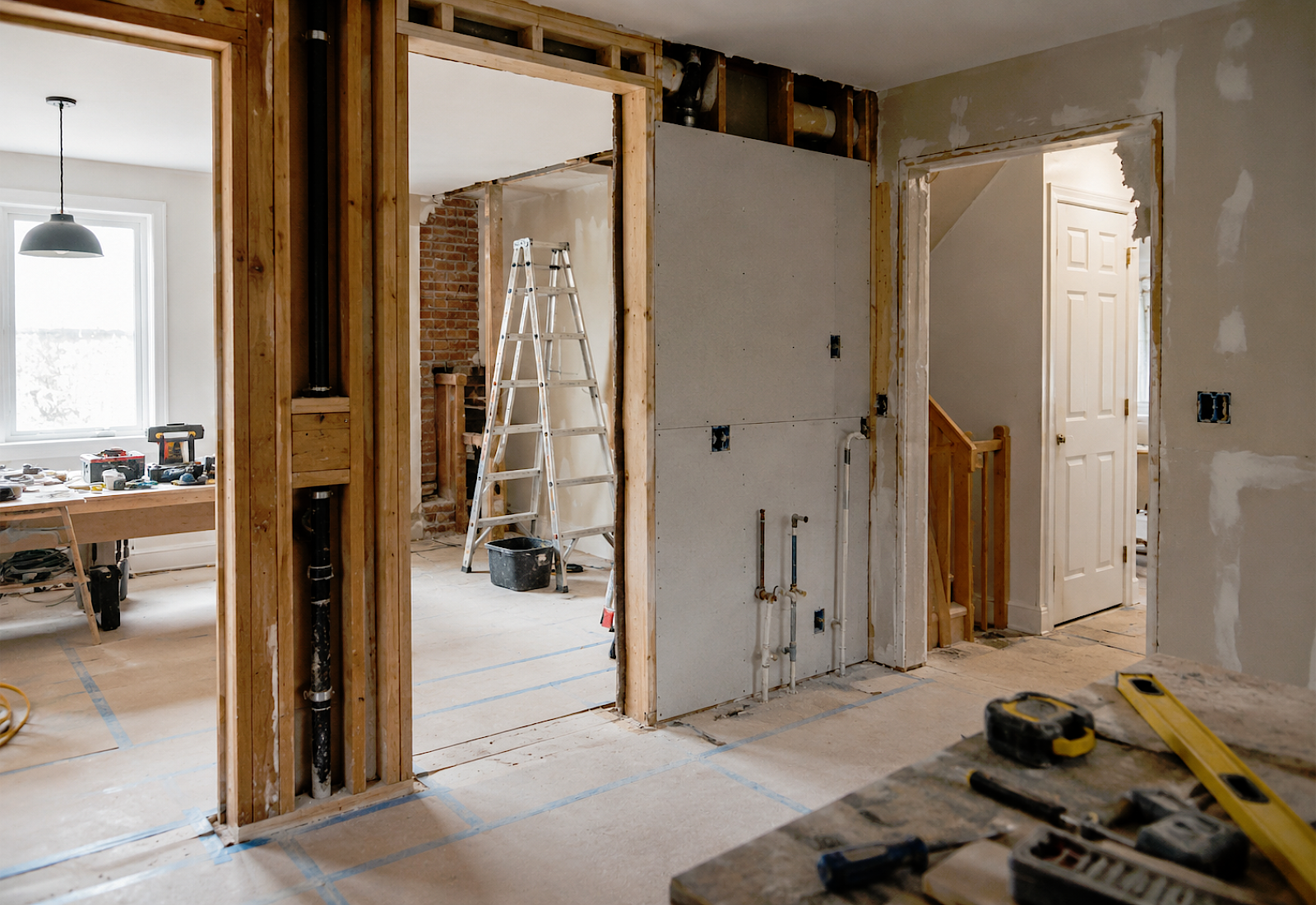
But the situation changes when the kitchen renovation involves removing a wall, changing structural support, relocating plumbing, modifying electrical systems, altering ventilation, or changing windows and doors.
This is why two kitchen renovation estimates can look very different. One may be pricing a cosmetic refresh, while another may be accounting for layout, structural, mechanical, or permit-related considerations.
Before planning a kitchen renovation in Toronto, it helps to understand whether the project is mainly a finish update or a larger interior alteration.
5. Bathroom Renovations and Permit Questions
Bathroom renovations can also vary widely in scope.
Replacing a vanity, toilet, tile, or fixtures may seem simple. But if the renovation includes moving plumbing, changing the shower layout, enlarging the bathroom, adding new ventilation, or modifying the floor or wall structure, the scope may need closer review.
Bathrooms also involve moisture control, ventilation, drainage, and waterproofing. Even when permit requirements are not the main issue, the renovation should still be planned carefully to avoid hidden problems after the finishes are installed.
For older Toronto homes, a bathroom renovation often reveals conditions that were not visible at the start. That is why it is important to discuss the existing conditions before finalizing the scope.
6. Basement Renovations Often Need Extra Attention
Basement renovations are another area where permit questions come up frequently.
A basement project may involve framing, insulation, electrical work, plumbing, bathroom additions, laundry areas, ceiling height issues, fire separation, exits, windows, or secondary suite considerations. These items can affect safety and code compliance.
If a basement is being finished for regular living space, or if the layout is being changed significantly, homeowners should not treat it as just a flooring and drywall project.
Basement renovation planning should include a careful review of layout, moisture conditions, ceiling height, mechanical systems, exits, and whether the intended use may trigger additional requirements.
7. Interior Alteration Permits for Toronto Homes
Toronto has a specific Interior Alterations permit guide for small residential buildings such as detached houses, semi-detached houses, and townhouses.
This is relevant because many renovation projects are not full new builds or additions. They may still involve interior changes that need to be reviewed.
For homeowners, the practical takeaway is simple: if the renovation changes more than finishes, it is worth checking whether it falls under an interior alteration process.
This does not mean every project is complicated. It means the scope should be clearly defined before decisions are made.
8. Zoning Can Still Matter
Many homeowners think zoning only applies to additions, new homes, or exterior changes. But zoning can still matter depending on the project.
Toronto notes that permit review may involve zoning by-laws as well as the Ontario Building Code and other applicable laws. The City also offers zoning review processes to help confirm compliance before a complete building permit application is submitted.
For typical interior finish updates, zoning may not be the main concern. But for projects involving a change of use, secondary suite planning, additions, entrances, parking, or exterior changes connected to an interior renovation, zoning should not be ignored.
9. Why Permit Questions Should Be Asked Before Finalizing the Estimate
Permit-related questions can affect the renovation timeline, drawings, professional involvement, inspections, and project coordination.
If permit requirements are discovered late, the project may face delays, redesign, added documentation, or changes to the planned work.
That is why homeowners should ask early:
What exactly is being changed? Are any walls being removed? Is plumbing being relocated? Is the basement being finished? Are new rooms being created? Are any windows, doors, stairs, or openings changing? Is the renovation only cosmetic, or is it a larger interior alteration?
Clear answers help the renovation team understand the likely scope before giving a realistic estimate.
10. What Homeowners Should Prepare Before Asking a Contractor
Before requesting a renovation estimate, it helps to prepare basic information about the project.
Useful details include:
Photos of the current space. A short description of what you want to change. Whether the layout will stay the same. Whether walls may be removed. Whether plumbing or electrical work may be relocated. Whether the project involves a basement, kitchen, bathroom, or full home interior. Any known issues with water, structure, uneven floors, old wiring, or previous renovations.
You do not need to solve the permit question by yourself before speaking with a renovation company. But you should be clear about the scope you are considering.
A contractor can help identify when the project may need further review, drawings, or consultation with the City or a permit professional.

11. What Nestova Studio Can Help With
Nestova Studio helps Toronto and GTA homeowners plan residential renovation projects with a clear understanding of scope, existing conditions, materials, and practical next steps.
We do not present this article as permit advice, and we do not replace the City of Toronto, a designer, architect, engineer, or permit consultant. But during the renovation planning stage, we can help you think through the work involved and identify whether your project may need additional review before construction begins.
For many homeowners, this early conversation is valuable because it helps separate a simple finish update from a larger interior renovation.
Planning an Interior Renovation in Toronto?
If you are planning a kitchen renovation, bathroom renovation, basement renovation, or full home interior renovation in Toronto or the GTA, start by clarifying the scope.
A good renovation plan should consider not only how the space will look, but also what may be affected behind the walls, under the floors, and within the existing home.
You can request an estimate and share a few photos of your current space. Nestova Studio can review your project direction, discuss the likely renovation scope, and help you understand what should be considered before work begins.