
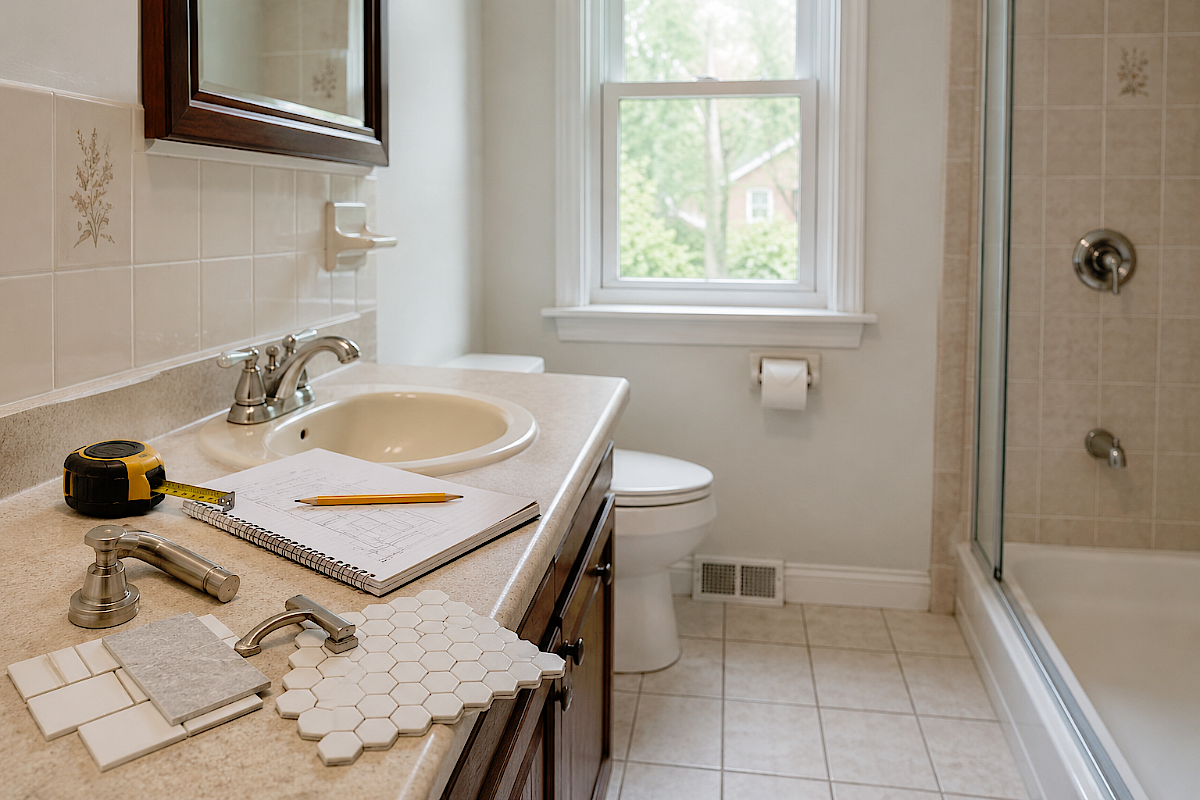
Many bathroom renovation projects start with a simple thought: the space looks old, the tiles feel dated, the vanity no longer fits the room, and the shower or bathtub is not as practical as it should be.
For many Toronto and GTA homeowners, the first plan may sound straightforward: replace the tiles, update the vanity, install new fixtures, improve the shower area, and make the bathroom easier to clean.
But in older homes, a bathroom renovation is often more than a surface update. What you see on the outside is only part of the project. The real scope can depend on waterproofing, ventilation, wall and floor conditions, plumbing layout, electrical needs, and how the bathroom has been maintained over the years.
Before choosing finishes, it is worth understanding what should be checked first.
1. Waterproofing Is More Important Than the Tile Itself
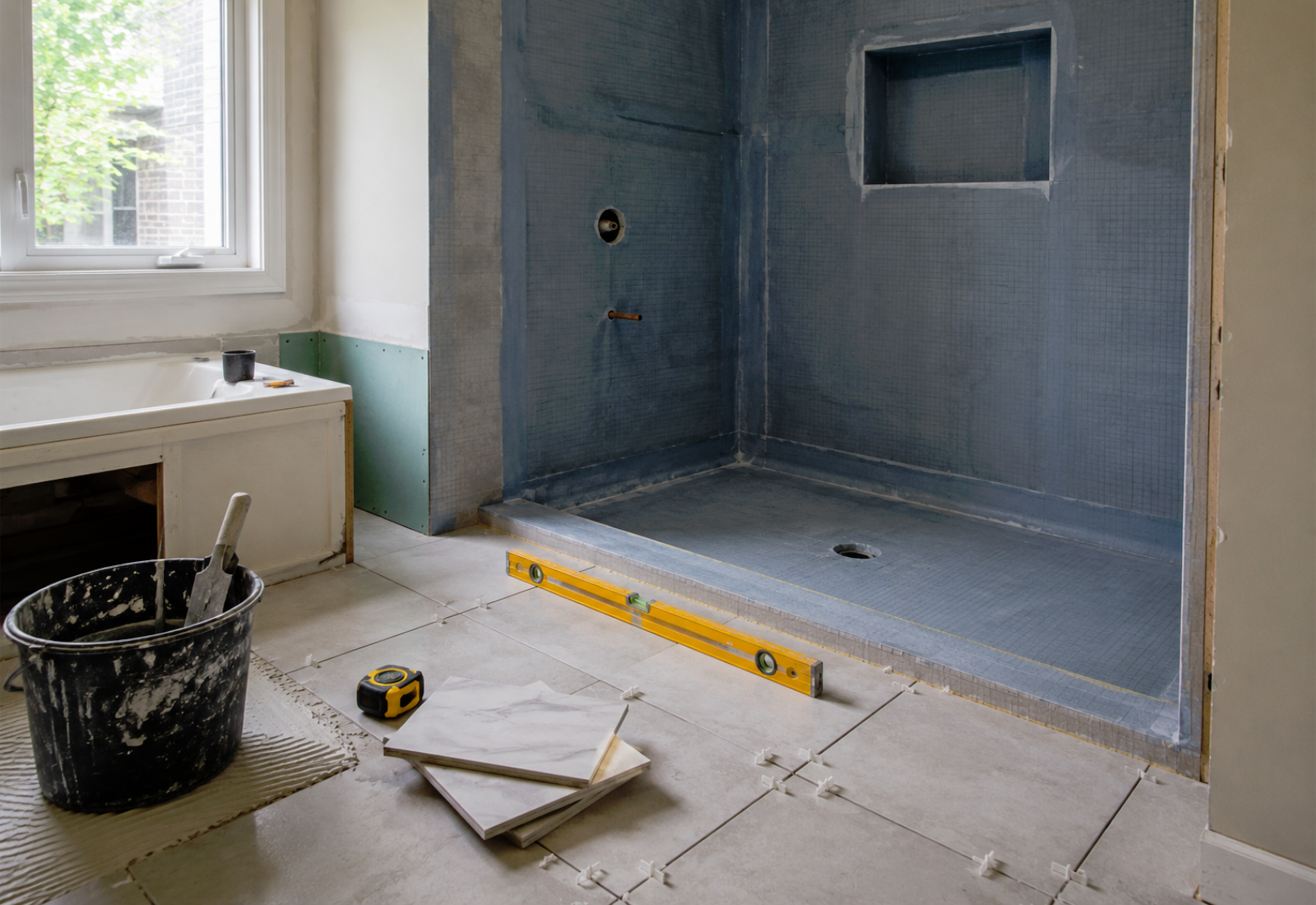
New tile can make a bathroom look clean and modern, but tile is not the full waterproofing system.
In many older bathrooms, the issue is not simply that the tile looks outdated. The bigger concern is what is happening behind the tile and under the floor. If the original waterproofing was limited, damaged, or poorly installed, replacing only the visible surface may not solve the real problem.
Signs that waterproofing should be reviewed include soft areas near the shower, cracked grout, loose tiles, staining, musty smells, or moisture around the tub or shower base. Even when these signs are not obvious, older bathrooms can still have hidden moisture concerns once demolition begins.
For this reason, a proper bathroom renovation should look at the full wet area system, not only the tile pattern or grout colour.
2. Ventilation Can Affect How Long the Renovation Lasts
Bathrooms deal with daily moisture. If the exhaust fan is weak, poorly located, or not venting properly, the new finishes may still face humidity problems after the renovation.
Poor ventilation can lead to lingering moisture, fogged mirrors, peeling paint, odours, and mildew concerns. In smaller bathrooms, basement bathrooms, and older homes, ventilation is especially important because the room may not dry out quickly after showers.
When planning a bathroom renovation, it is worth checking whether the current fan is strong enough, whether the ducting is properly connected, and whether the bathroom layout allows moisture to leave the space efficiently.
A beautiful bathroom that does not dry properly can become frustrating to maintain.
3. Wall and Floor Conditions May Change the Scope
Many homeowners begin with the visible items: tile, vanity, toilet, shower glass, faucets, lighting, and mirrors. But once the old finishes are removed, the condition of the walls and floor can affect the renovation scope.
Older bathrooms may have uneven framing, damaged drywall, moisture-affected subfloor areas, or surfaces that are not ready for new tile installation. If the floor is not level or the shower area is not properly prepared, the final finish may not perform well.
This is one reason bathroom renovation estimates can vary. One contractor may price a simple surface refresh, while another may include proper preparation, waterproofing, substrate work, and layout adjustments.
The difference is not always in the tile or vanity. Sometimes the difference is in what is included behind the finished surface.
4. Plumbing Layout Should Be Reviewed Before Choosing Fixtures
Changing a vanity, toilet, shower valve, tub, or drain location can affect the plumbing scope.
If the new design keeps everything in the same place, the project may be simpler. But if you want to move the toilet, convert a tub to a shower, enlarge the shower area, change the vanity size, or add a niche, the plumbing and wall structure need to be reviewed first.
This does not mean every layout change is a bad idea. Sometimes changing the layout makes the bathroom much more functional. But it should be planned with the existing conditions in mind.
Before ordering fixtures, homeowners should confirm whether the selected products fit the space, connect properly, and make sense for the existing plumbing location.
5. Electrical and Lighting Details Should Not Be Left Until the End
Bathroom lighting is often treated as a finish decision, but it affects daily use.
A bathroom may need better vanity lighting, improved ceiling lighting, a properly placed fan switch, GFCI-protected outlets, or updated wiring depending on the condition of the existing setup.
These details should be reviewed before the walls are closed and before final tile work begins. Leaving electrical planning too late can limit the final result or create unnecessary changes during construction.
For a bathroom used every day, practical lighting and safe outlet placement are just as important as the colour of the tile.
6. Storage, Cleaning, and Daily Use Should Guide the Design
A bathroom renovation should not only look better on the day it is completed. It should also be easier to use and maintain.
Before finalizing the design, homeowners should think about how the bathroom is used every day:
Do you need more drawer storage instead of open shelves? Is the vanity too small for the room? Is the shower area difficult to clean? Does the toilet feel cramped? Is there enough space for towels and daily items? Would a recessed niche make the shower more practical?
These questions may seem small, but they often decide whether the finished bathroom actually works well.
In many Toronto homes, bathroom space is limited. Good planning can make a compact bathroom feel more organized without forcing unnecessary layout changes.
7. Bathroom Renovation Estimates Should Be Compared by Scope, Not Just Price
When homeowners compare bathroom renovation quotes, the numbers can vary widely.
A lower estimate may only include visible replacement work. A more detailed estimate may include demolition, preparation, waterproofing, tile substrate, plumbing adjustments, ventilation improvements, electrical work, disposal, finishing details, and project coordination.
This is why it is important to compare what is included, not only the final number.
Before choosing a contractor, ask whether the estimate accounts for wet area preparation, waterproofing, ventilation, plumbing conditions, electrical needs, fixture installation, cleanup, and possible hidden issues after demolition.
A clear scope helps reduce surprises and makes the renovation easier to manage.
8. What Homeowners Should Prepare Before Requesting an Estimate
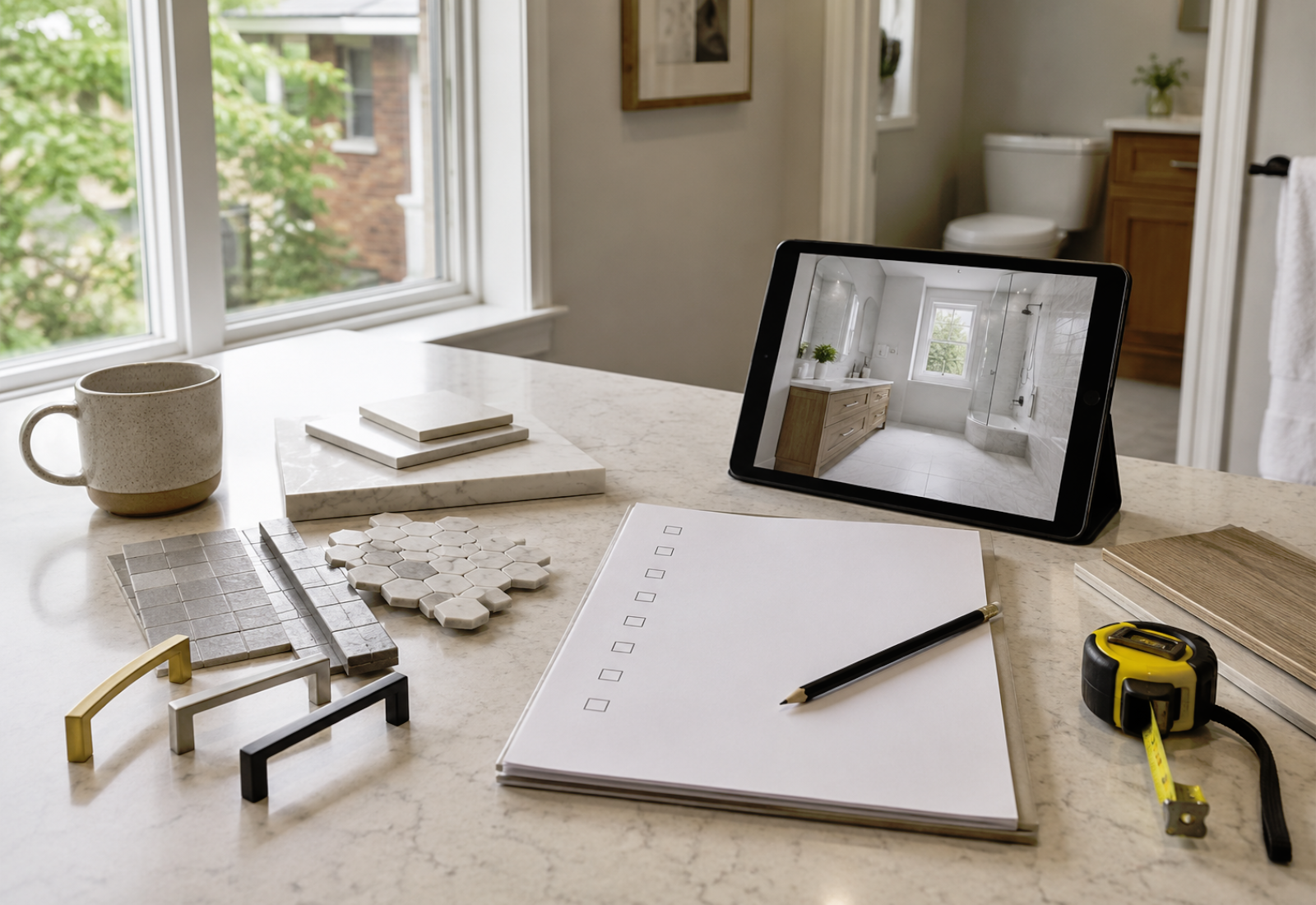
Before requesting a bathroom renovation estimate, it helps to prepare a few basic details:
The bathroom location in the home, such as main floor, second floor, basement, or ensuite. The approximate size of the bathroom. Whether you want to keep or change the existing layout. Photos of the current bathroom. Any known issues with moisture, ventilation, leaks, odours, or loose tiles. A general idea of the finishes you like, even if you have not selected exact products yet.
You do not need to have every detail finalized before speaking with a renovation team. But the more clearly you describe the current conditions and your priorities, the easier it is to understand the likely scope.
Planning a Bathroom Renovation in Toronto or the GTA?
A bathroom renovation should balance appearance, function, moisture control, and long-term durability. The best results usually come from reviewing the existing conditions before focusing only on tile, vanity, and fixture selections.
Nestova Studio helps Toronto and GTA homeowners plan residential renovation projects with a clear understanding of scope, site conditions, materials, and practical next steps.
If you are planning a bathroom renovation, you can request an estimate and share a few photos of your current space. We can review the project direction and help you understand what should be considered before work begins.